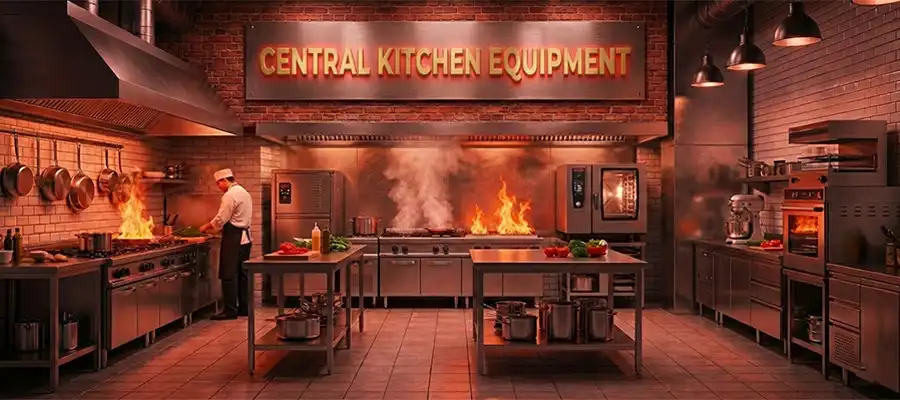
Setting up central kitchens has become an absolute necessity for any food business seeking success and expansion in the Egyptian market. Whether you are planning to open a new restaurant, hotel, café, or even a catering and food delivery business, a professionally equipped central kitchen is the beating heart of your operations.
In this comprehensive guide by Target Egypt, we cover everything you need to know about central kitchen setup — from core concepts to the fine details that make the difference between an ordinary kitchen and a highly efficient professional one.
What Are Central Kitchens and Why Do You Need Them?
A central kitchen is a specialized facility designed to produce large quantities of food efficiently while maintaining strict health and safety standards. Unlike traditional kitchens, a central kitchen operates as a main production hub serving multiple outlets, branches, or dining halls.
The core idea behind a central kitchen is the centralization of food preparation and cooking in one fully equipped location, followed by distributing ready or semi-ready meals to branches or serving points. This model delivers massive cost savings, ensures consistent quality, and simplifies monitoring and control.
Large hotels use central kitchens to serve multiple restaurants, room service, and events. Restaurant chains rely on them to ensure every branch delivers the same taste and quality. Catering companies build their entire business around central kitchens capable of producing thousands of meals daily. Even large independent restaurants benefit significantly from adopting a central kitchen model.
The Difference Between Central Kitchens and Traditional Kitchens
A traditional kitchen is designed for immediate cooking and direct service to customers. Each meal is prepared, cooked, and served in the same location. While this model works well for small and medium-sized restaurants, it faces major challenges when scaling or meeting increased demand.
A central kitchen separates production stages. Preparation and cooking take place centrally in large batches, then food is stored and distributed to serving points that may only require reheating or minor finishing touches. This separation enables greater specialization and efficiency.
In terms of space, central kitchens are usually much larger and divided into specialized work zones: preparation, cooking, cooling, packaging, and more. Traditional kitchens are smaller and more compact.
Central kitchens use industrial-grade equipment with massive production capacity: ovens that cook 50 kg of meat at once, fryers handling 30 kg of potatoes, giant mixers, and industrial dishwashers. Traditional kitchens rely on smaller equipment suitable for limited quantities.
Why Invest in a Professional Central Kitchen Setup?
Equipping a professional central kitchen is a significant investment, but the return far outweighs the cost over the medium and long term.
Reducing Operational Costs
Central kitchens achieve major cost savings through economies of scale. Purchasing raw materials in bulk secures wholesale discounts that can reach 20–30%. Instead of each branch buying separately at retail prices, the central kitchen supplies everyone at wholesale rates.
Labor efficiency also improves. Instead of hiring 3 chefs in each of 5 branches (15 chefs total), you can hire 8–10 chefs in one central kitchen to produce the same or greater output. Specialized, organized work increases productivity per employee.
Energy consumption is more efficient. Cooking 100 kg of rice in one large pot consumes far less energy than cooking it in 10 separate small pots. Modern industrial equipment is designed for maximum gas and electricity efficiency.
Food waste is significantly reduced. Centralized planning and precise batch production minimize surplus. In multiple traditional kitchens, each branch may end up with unusable leftovers. In a central kitchen, everything is calculated and planned.
Quality Consistency and Standardization
One of the biggest challenges for restaurant chains is ensuring consistent quality across branches. A customer who enjoys your food in Nasr City expects the same experience in Maadi. Central kitchens make this consistency easy.
Recipes are executed precisely under direct supervision. Ingredients are weighed accurately, cooking times are measured to the minute, and temperatures are strictly controlled. Each production batch meets the same specifications. Branches receive ready or semi-ready products with consistent quality.
Training becomes easier and more effective. Instead of training dozens of chefs across different locations, you train one central team. Training is focused and specialized, resulting in higher final product quality.
Quality control is centralized and strict. One quality control team monitors all production instead of trying to supervise multiple scattered kitchens. Problems are detected instantly and resolved quickly.
Speed and Operational Efficiency
A well-equipped central kitchen can produce large quantities in a short time. What might take 6 hours in a traditional kitchen can be completed in just 2 hours with professional equipment. This speed is crucial during peak times and large events.
Specialization boosts efficiency. Each worker focuses on a specific task they master perfectly: vegetable prep, grilling, packaging immediately after cooking. Meals are sealed in individual containers with labels indicating contents and production dates, rapidly cooled, and transported in refrigerated vehicles — maintaining a continuous cold chain from kitchen to consumer.
Production capacity is massive: multi-level ovens, 200-liter cooking pots, industrial fryers, and walk-in refrigerators. The investment is substantial, but the output justifies it.
Central Kitchens for Cafés and Coffee Shops
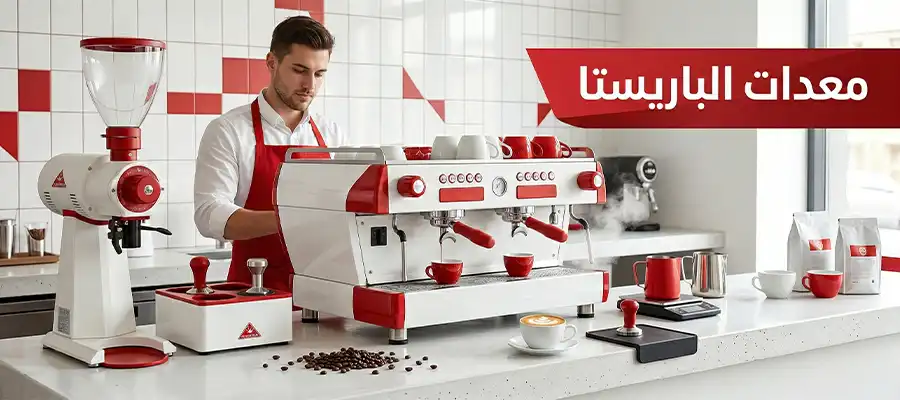
Cafés focus on beverages, pastries, and light meals. A central kitchen can serve multiple branches with ready-made baked goods and desserts.
Large convection ovens are essential for producing croissants, cakes, and cookies in bulk with consistent quality. Cold dessert equipment includes display refrigerators, mixers, decorating tools, and cheesecake equipment. Central preparation allows daily fresh distribution.
Sandwich and salad prep is centralized: vegetables are chopped, mixes prepared, and packed in containers. Branches assemble sandwiches quickly from ready components, ensuring speed and consistency.
Essential Central Kitchen Equipment
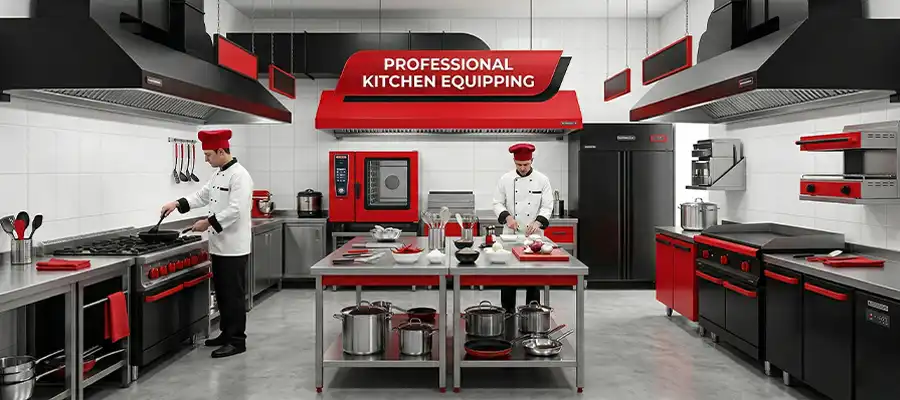
Setting up a central kitchen requires a comprehensive range of high-quality industrial equipment. Choosing the right equipment determines efficiency and output quality.
Preparation Equipment
-
304 stainless steel worktables
-
Triple-compartment industrial sinks
-
Industrial vegetable cutters
-
Heavy-duty mixers (20–60 liters)
-
Industrial meat grinders (200–500 kg/hour)
Cooking Equipment
-
Industrial convection ovens (5–10 trays)
-
Industrial gas ranges (4–8 burners)
-
Deep fryers (15–40 liters)
-
Industrial grills (gas, electric, or charcoal)
-
Large cooking pots (50–200 liters)
-
Pizza ovens (gas, electric, or wood-fired)
Refrigeration & Freezing
-
Upright refrigerators (800–1400 liters)
-
Deep freezers (-18°C to -25°C)
-
Walk-in cold rooms
-
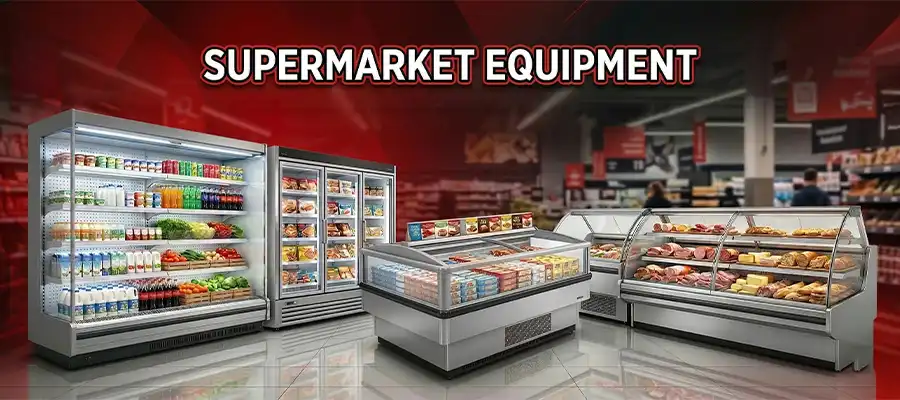
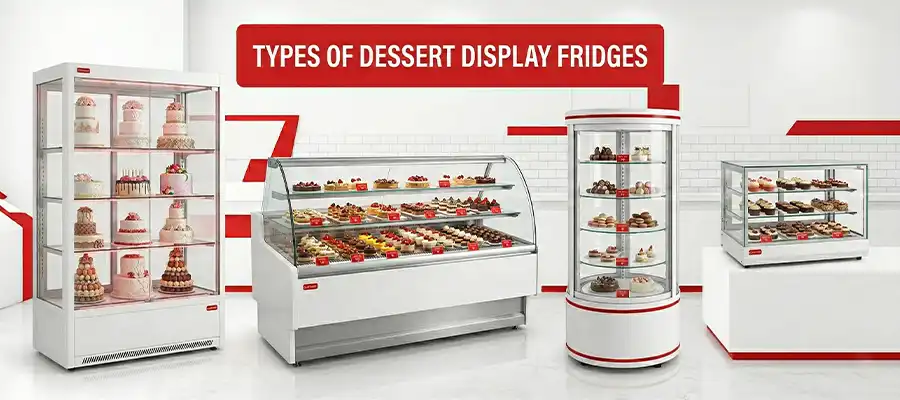
Display refrigerators for desserts
-
Refrigerated prep tables
Washing & Cleaning
-
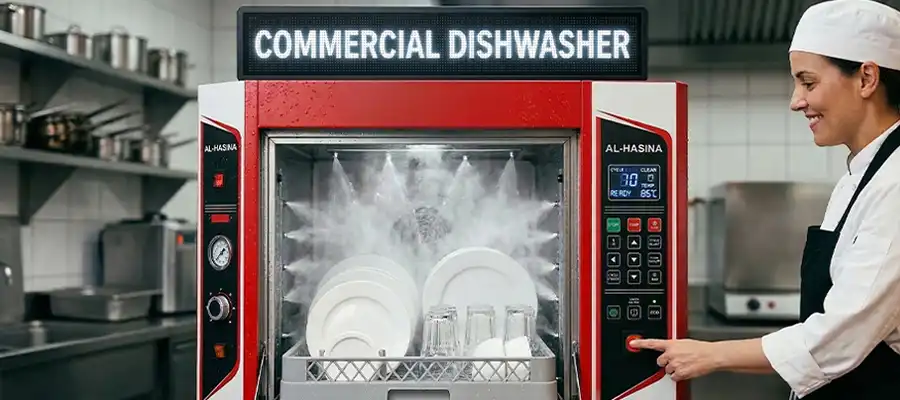
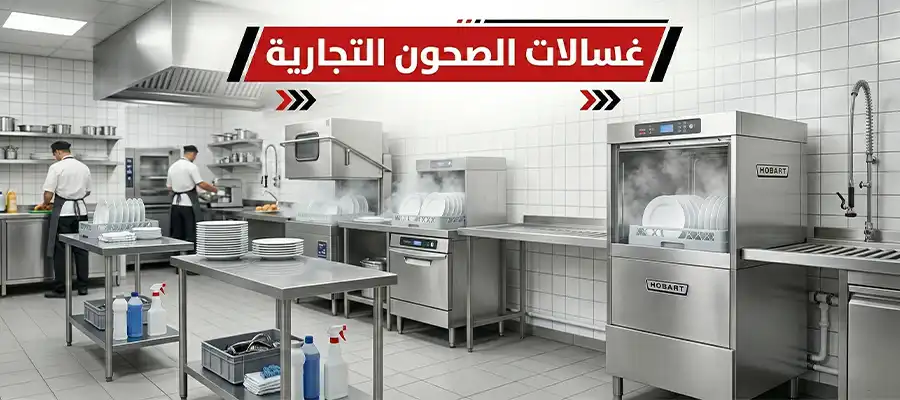
Conveyor-type industrial dishwashers
-
Triple sinks for large cookware
-
Dish transport carts
-
Sterilization equipment (steam or UV)
Ventilation Systems
Professional Central Kitchen Design & Layout
Equipping a central kitchen is not just about buying equipment — it’s about smart layout planning.
Key Design Principles
-
Linear workflow from receiving to distribution
-
Separation of clean and dirty areas
-
Wide movement corridors (120–150 cm)
-
Strong, uniform lighting (500–1000 lux)
-
Easy-to-clean floors, walls, and ceilings
Functional Zones
Central Kitchen Setup Cost in Egypt (2026)
Estimated Costs
-
Small central kitchen (200–300 meals/day): EGP 500,000 – 800,000
-
Medium central kitchen (500–1000 meals/day): EGP 1,000,000 – 2,000,000
-
Large central kitchen (2000+ meals/day): EGP 2,500,000 – 5,000,000+
Costs vary based on specifications and quality. Target Egypt offers free consultations to calculate precise costs based on your needs.
Health & Safety Standards
Strict adherence to food safety is mandatory:
-
Separation of raw and cooked food
-
Temperature control (danger zone: 5°C–60°C)
-
Personal hygiene and medical checks
-
Pest control systems
-
Continuous food safety training
Why Choose Target Egypt?
-
Proven experience in Egypt
-
Expert industrial kitchen designers
-
High-quality equipment (304 stainless steel)
-
Competitive pricing with bundled discounts
-
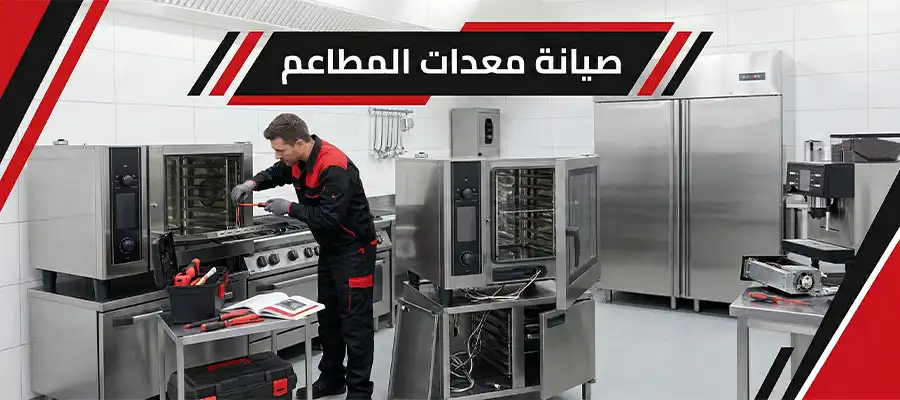
End-to-end service: design, supply, installation, training, maintenance
-
Flexible payment plans
Frequently Asked Questions
What is hotel kitchen equipment?
Professional-grade equipment designed for continuous operation in hotels and central kitchens.
What’s the difference between a central kitchen and a hotel kitchen?
A central kitchen serves multiple outlets, while a hotel kitchen serves hotel facilities only.
What are the best materials for kitchen equipment?
Stainless steel (304) is the best for durability and hygiene.
Can a hotel kitchen be designed in a small space?
Yes, with compact equipment and smart layout planning.
Read:
Display Refrigerators: A Complete Guide from Target Egypt





 Beverage Machines
 Coolers
 Food Preparation
 Heating & Cooking
 KAZ Commercial