Display refrigerators are among the essential appliances in retail stores and restaurants. However, they are also one of the highest electricity-consuming devices if not used properly, especially with the current rise in energy costs. This makes it necessary to look for effective ways to reduce their electricity consumption without affecting cooling efficiency or product preservation quality. By following proper operation methods and performing regular maintenance, electricity usage can be significantly reduced while extending the refrigerator’s lifespan. In this article, we will explore the most important tips and methods to achieve this effectively.
Reducing Electricity Consumption of Display Refrigerators
These appliances operate continuously throughout the day, which can lead to high electricity bills. However, by adopting proper usage and maintenance practices, efficiency can be improved and energy consumption reduced without compromising cooling quality or product preservation.
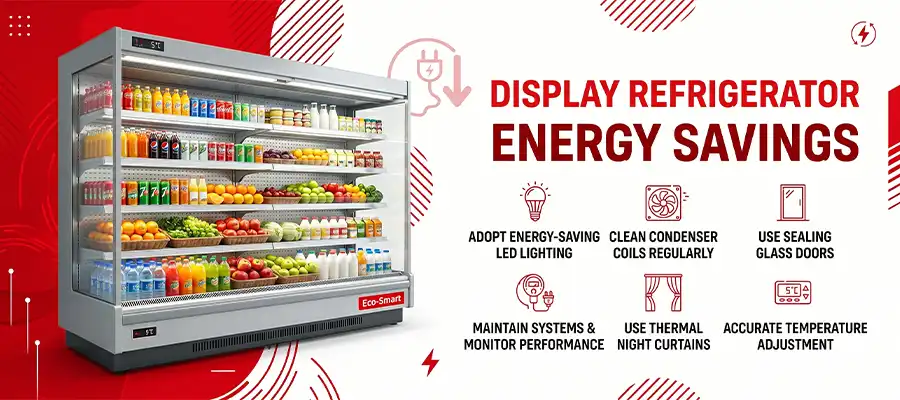
- Set the temperature correctly: Maintaining an appropriate temperature (usually between 2–4°C) reduces energy consumption and prevents excessive strain on the compressor.
- Minimize door opening: Frequent opening allows warm air inside, forcing the refrigerator to work harder.
- Avoid placing hot items inside: Hot products raise internal temperature and significantly increase energy usage.
- Organize products properly: Proper arrangement improves cold air circulation and reduces pressure on the cooling system.
- Allow ventilation space: Leave 10–15 cm around the fridge to improve airflow and reduce energy consumption.
- Keep away from heat sources: Avoid placing it near sunlight or ovens.
- Clean regularly: Dust and ice buildup increase electricity usage.
- Ensure proper door sealing: Air leaks reduce efficiency and increase consumption.
- Perform regular maintenance: Checking components like the thermostat and compressor ensures optimal performance.
How to Properly Set Display Refrigerator Temperature
Correct temperature settings are essential for maintaining product quality and reducing electricity consumption.
1. Ideal Temperature Range:
- Beverages & dairy: 1–4°C
- Fruits: 3–5°C
- Freezers (if available): around -18°C
2. Adjusting the Thermostat:
- Modern refrigerators: Set digitally (e.g., 3°C)
- Traditional ones: Choose a medium level (3 or 4 out of 5)
- Adjust gradually until optimal performance is reached
3. Allow Stabilization Time:
Wait 6–12 hours after adjusting temperature before evaluating results.
4. Use an Internal Thermometer:
To ensure actual temperature accuracy, as some displays show set—not actual—temperature.
5. Consider Product Type:
- Drinks: 2–4°C
- Desserts: 2–5°C
- Ready meals: 1–4°C
6. Reduce Door Opening During Adjustment:
Frequent opening affects temperature readings and delays stabilization.
Importance of Proper Product Arrangement
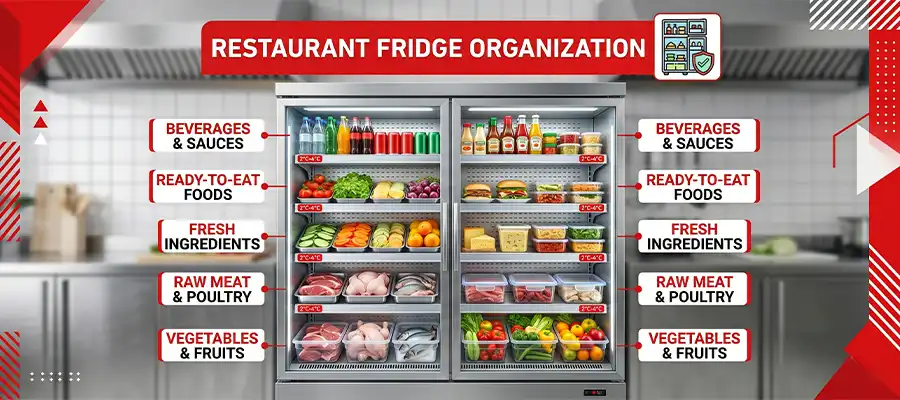
Correct product distribution is essential for cooling efficiency and product quality.
- Improves cold air circulation
- Maintains consistent internal temperature
- Reduces electricity consumption
- Extends appliance lifespan
- Prevents product spoilage
- Enhances product display and boosts sales
- Avoids blocking ventilation openings
Role of Regular Cleaning in Energy Saving
Routine cleaning plays a major role in maintaining efficiency and reducing electricity usage.
- Reduces compressor workload
- Cleaning the condenser improves heat dissipation
- Enhances airflow inside the fridge
- Prevents ice buildup
- Maintains cooling efficiency longer
- Reduces breakdowns and maintenance costs
- Extends lifespan of the refrigerator
Choosing the Right Location
Proper placement directly impacts cooling efficiency and energy consumption.
- Keep away from heat sources
- Ensure good ventilation
- Leave at least 5–10 cm space around it
- Avoid tight or enclosed spaces
- Place in a moderate temperature environment
- Choose a location that minimizes frequent door opening
Common Mistakes That Increase Electricity Consumption
- Placing hot products inside
- Frequent door opening
- Ice accumulation
- Lack of ventilation space
- Random product stacking
- Neglecting cleaning
- Setting unnecessarily low temperatures
- Placing near heat sources
Best Display Refrigerators from Target Egypt
Display refrigerators are essential for commercial projects, helping preserve and present products attractively.
Open Display Refrigerator 1m Blizzard
- Open-front design for easy access
- Adjustable shelves
- Air curtain technology
- LED lighting
- Stainless steel structure
- Night curtain for energy saving
- Eco-friendly R290 refrigerant
Polar Dessert Display Refrigerator
- Forced-air cooling system
- Automatic defrost
- Curved glass design
- Stainless steel body
- Eco-friendly refrigerant
- Compact countertop design
Double Door Display Refrigerator (900L)
- Self-closing glass doors
- Forced-air cooling
- LED lighting
- Adjustable shelves
- Automatic defrost
- Large storage capacity
- Durable structure
Frequently Asked Questions
Does a display refrigerator consume a lot of electricity?
Yes, because it operates continuously, but consumption can be reduced with proper usage.
What is the best temperature to reduce consumption?
Between 2–4°C, as excessive cooling wastes energy.
Does frequent door opening increase electricity usage?
Yes, it allows warm air inside and increases cooling load.
Conclusion
Reducing the electricity consumption of display refrigerators can be achieved through practical steps such as proper temperature settings, organizing products, regular cleaning, and maintenance. Avoiding common mistakes and choosing the right location also play a significant role in improving efficiency, lowering costs, and extending the refrigerator’s lifespan.













 Beverage Machines
 Coolers
 Food Preparation
 Heating & Cooking
 KAZ Commercial