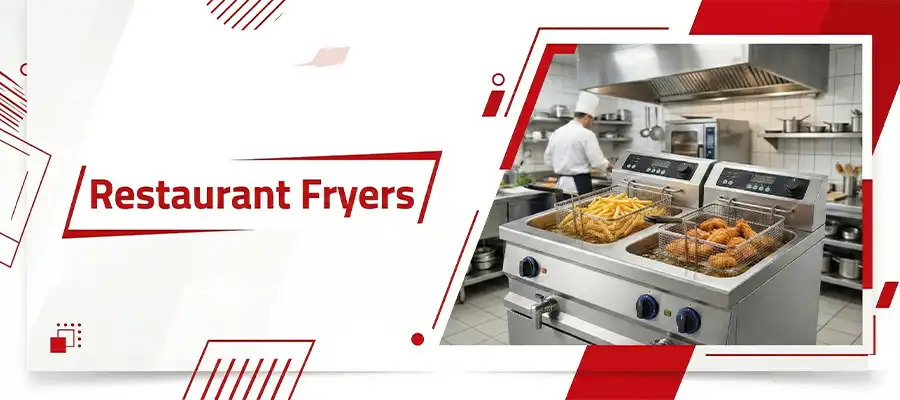
Restaurant fryers are among the most essential cooking pieces of equipment in commercial kitchens, as many restaurants rely on them to deliver main dishes and appetizers that combine fast service with consistent flavor. With a wide range of fryer types, capacities, and technologies, selecting the right fryer becomes a critical decision that directly affects operational efficiency, energy costs, and food quality. Therefore, it is essential to understand the differences between the various types of restaurant fryers and how to choose the best one according to your restaurant’s concept and daily order volume.
Types of restaurant fryers available in the market
When equipping your restaurant kitchen, picking the right type of commercial fryer is a fundamental step to ensure efficient operations and high‑quality fried food. fryers differ in design and operation depending on production scale and the types of dishes served, so it is important to get familiar with the models available before making a purchase.
-
Electric fryers
-
Powered by electricity and ideal for small to medium‑sized kitchens.
-
Easy to install and do not require gas connections.
-
Safer to operate as they do not use an open flame.
-
Well suited for cafés, food trucks, and mid‑volume restaurants.
-
Offer precise temperature control for consistent frying results.chefsicon+1
-
Gas fryers
-
Operate on gas and provide fast oil heating and quick heat recovery during peak hours.
-
Ideal for high‑volume restaurants and quick‑service food outlets.
-
Often have lower running costs in locations where gas is readily available and affordable.gofoodservice+1
-
Pressure fryers
-
Use cooking under pressure to lock in moisture inside the food while creating a perfectly crispy exterior.
-
Commonly used in fried‑chicken‑specialty restaurants.
-
Reduce oil absorption compared with traditional deep‑fat fryers, improving texture and lowering oil usage.chefsicon+1
-
Floor‑standing fryers
-
Feature large oil tanks that suit high‑volume production.
-
Stand directly on the kitchen floor in commercial kitchens.
-
Ideal for restaurant chains and central kitchens.
-
Typically run on gas and can reach capacities of 100 liters or more.therestaurantwarehouse+1
-
Countertop fryers
-
Compact and space‑saving units, perfect for limited spaces.
-
Commonly used in kiosks, cafés, and small‑scale fast‑food setups.
-
Easy to move and clean, suitable for moderate frying volumes.therestaurantwarehouse+1
-
Open‑pot fryers (open‑tank fryers)
-
Open‑tank design that is easy to clean and maintain.
-
Well suited for foods with low residue such as French fries.
-
One of the most widely used fryer types in restaurants.resources.centralrestaurant+1
-
Tube‑fryers (tube‑type fryers)
-
Equipped with heating tubes submerged in the oil.
-
Provide a cold zone at the bottom of the tank to prevent burning food particles.
-
Ideal for battered or breaded items such as fried chicken and fish.resources.centralrestaurant+1
How to choose the right restaurant fryer according to your activity
When setting up your restaurant kitchen, selecting the appropriate fryer for your menu and production level is a crucial step to ensure quality fried food and smooth workflow, with the choice depending on factors such as output volume, dish type, and available space.
-
Determine your daily order volume:
-
Small‑scale projects are often satisfied with medium‑capacity fryers.
-
High‑peak restaurants may need larger fryers or multi‑tank units to minimize order waiting times.thekitchenspot+1
-
Match fryers to your menu:
-
Breaded or battered items work best with tube‑fryers that reduce burnt residue.
-
Lighter items or pan‑fried pizza perform better in flat‑bottom fryers.therestaurantwarehouse+1
-
Choose between gas and electric:
-
Electric fryers suit small spaces and require precise temperature control.
-
Gas fryers deliver higher heating power and faster response, making them ideal for high‑volume, high‑turnover kitchens.chefsicon+1
-
Consider ease of cleaning and maintenance:
-
Select fryers with removable tanks and accessible parts to reduce cleaning time and improve operational efficiency.mfstradeschool+1
-
Pay attention to safety and energy efficiency:
-
Ensure the unit has safety features such as auto‑shut‑off and overheat protection.
-
Energy‑efficient models reduce utility bills and ease heat buildup in the kitchen.smartcaresolutions+1
-
Balance capacity with available floor space:
-
Large floor‑standing fryers fit big kitchens with high demand.
-
Compact countertop units suit small‑footprint restaurants or mobile food businesses.gofoodservice+1
-
Plan for future expansion:
-
If you plan to expand your menu or increase customer numbers, choose fryers that allow scaling up or adding extra units later.thekitchenspot+1
Advantages of modern fryers and available safety technologies
Modern restaurant fryers come with advanced technical features that help improve food quality, increase operational efficiency, and reduce risks in the kitchen, as well as incorporate sophisticated safety technologies that protect staff and minimize accidents.
-
Precise temperature control:
Digital controls let operators set and maintain exact frying temperatures, preserving food quality and reducing waste caused by overheating.resources.centralrestaurant+1
-
Optimized heat‑distribution designs:
Even heat distribution ensures balanced, crispy cooking without under‑cooked or burnt spots.therestaurantwarehouse+1
-
Built‑in oil‑filtration systems:
Some commercial fryers include integrated oil‑filtration technology that extends oil life, improves food quality, and lowers operating costs.smartcaresolutions+1
-
Residue‑removal technologies:
In advanced industrial fryers, residue‑removal systems help keep the oil clean and reduce pollution from food particles.twothousand+1
-
Advanced safety features:
Modern fryers often include auto‑shut‑off in case of overheating or malfunction, protection against unintended ignition, and improved guarding for safer working conditions.mfstradeschool+1
-
Smart control interfaces:
Easy‑to‑use digital displays with alarms and real‑time diagnostics help monitor performance and prevent errors before they escalate.chefsicon+1
-
Improved operational efficiency:
Intelligent systems and advanced controls support continuous operation and reduce waste, helping you serve high volumes efficiently, especially during rushes.twothousand+1
Tips for maintaining your fryer and extending its service life
To keep restaurant fryers in good condition and extend their operational life, you must follow regular cleaning and maintenance routines that ensure high‑efficiency performance and reduce unexpected breakdowns. Proper maintenance goes beyond surface cleaning and includes daily and periodic steps to preserve both performance and food quality.
-
Clean the fryer regularly after each use:
Wipe both the interior and exterior surfaces to remove food debris and built‑up oils that can damage the equipment over time.mfstradeschool+1
-
Filter and strain the oil periodically:
Filter the oil multiple times during service hours to remove impurities and food particles, helping to maintain oil quality and prolong its usable life.twothousand+1
-
Change oil when signs of degradation appear:
Replace the oil when it turns dark, smells burnt, or imparts an off‑taste, to protect food quality and fryer performance.starfoodequipment+1
-
Monitor and adjust frying temperatures correctly:
Maintaining the proper temperature minimizes oil consumption, preserves internal components, and ensures consistent food quality.smartcaresolutions+1
-
Perform deep cleaning periodically:
In addition to daily cleaning, carry out thorough deep‑cleaning cycles (for example weekly, depending on usage) to remove accumulated residues inside the tank.mfstradeschool+1
-
Inspect parts and settings regularly:
Periodically check heating elements, temperature controls, and other fryer components to confirm they are operating correctly.smartcaresolutions+1
-
Cover the fryer when not in use:
Using a cover when the fryer is idle reduces exposure of the oil to air and airborne particles that accelerate degradation.twothousand+1
-
Train staff in proper operation and cleaning:
Teaching the team correct operating and cleaning procedures reduces mistakes and significantly extends fryer life.mfstradeschool+1
-
Seek professional technical maintenance when needed:
When you notice any malfunction or reduced performance, call qualified technicians for inspection and appropriate maintenance before problems worsen.twothousand+1
Why choose heating and cooking equipment from Target Egypt?
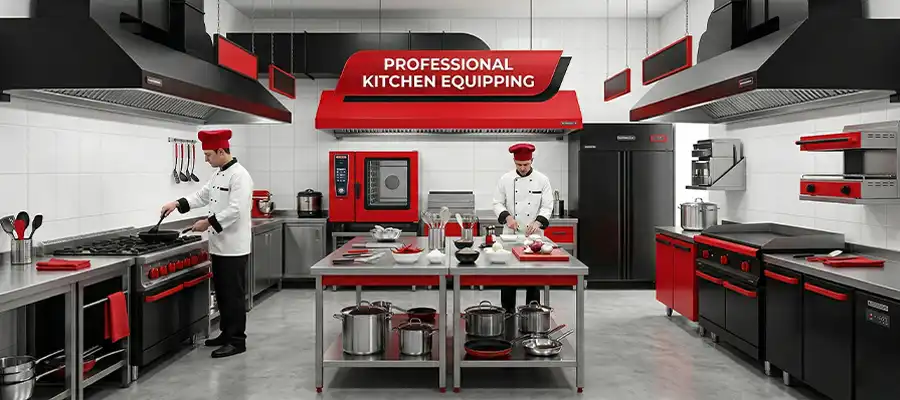
Heating and cooking equipment from Target Egypt forms the core of any professional kitchen in restaurants, hotels, and cafés, ensuring fast and consistent performance, stable temperature control, and preservation of food flavor and quality. Choosing the right equipment helps improve operational efficiency and enables you to serve uniform, high‑quality dishes all day long.therestaurantwarehouse+1
-
Wide range of professional equipment:
Includes industrial ovens, fryers, grills, commercial ranges, steam cookers, and hot‑holding units to suit all kitchen types.resources.centralrestaurant+1
-
High durability and quality:
Built with stainless‑steel frames that withstand daily pressure and ensure long‑term operation.starfoodequipment+1
-
Multiple power sources (gas and electric):
Units powered by gas or electricity are selected to match existing kitchen infrastructure while maintaining energy efficiency and lower consumption.chefsicon+1
-
Easy cleaning and maintenance:
Equipment layouts are designed with daily cleaning and service in mind, helping maintain food‑safety standards.smartcaresolutions+1
-
Improved workflow in the kitchen:
Thoughtful equipment placement facilitates chef movement and shortens preparation time, directly improving service speed and customer satisfaction.therestaurantwarehouse+1
-
Stable operation and continuous production:
Investing in high‑quality equipment guarantees consistent‑quality dishes throughout operating hours, a key factor for success in the food and beverage sector.thekitchenspot+1
-
Suitable for different kitchen profiles:
Whether fast‑service kitchens that need speed and efficiency, or specialized kitchens that require precise temperature control, Target Egypt offers tailored solutions.therestaurantwarehouse+1
Frequently asked questions about restaurant fryers
-
What is the difference between a commercial fryer and a household fryer?
Commercial fryers are built for long operating hours, larger capacities, and heavy daily use in restaurants, whereas household models are smaller and designed for light, intermittent use.gofoodservice+1
-
How do I choose the right fryer capacity for my restaurant size?
Small restaurants typically need fryers with capacities around 8–10 liters, while larger restaurants or mobile food units often require 15 liters or more to handle high volumes.therestaurantwarehouse+1
-
What is the difference between electric and gas fryers?
Electric fryers are easier to control and clean and fit well in small spaces, while gas fryers offer higher heating power and faster response, making them suitable for high‑volume restaurants.resources.centralrestaurant+1
In conclusion, we have reviewed the main types of restaurant fryers, highlighted how to choose the right fryer according to your restaurant’s activity, discussed the benefits of modern fryers and available safety technologies, and provided key maintenance tips to extend their service life. This helps guarantee food quality and operational efficiency in your commercial kitchen.







 Beverage Machines
 Coolers
 Food Preparation
 Heating & Cooking
 KAZ Commercial